Introduction
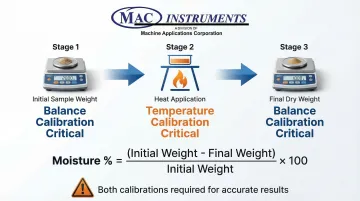
Accurate moisture analysis depends on two calibration processes working in tandem: temperature calibration and balance/weight calibration. Temperature calibration verifies your heating system reaches and maintains set temperatures, while balance calibration confirms the weighing system measures sample weight precisely.
Since moisture content calculation relies on both accurate temperature and weight measurement, neglecting either calibration compromises your results.
This technical precision isn't just good practice—it's a regulatory requirement in industrial applications. Regulatory bodies including the FDA and ISO auditors increasingly scrutinize equipment maintenance programs.
FDA 21 CFR Part 211.68 and ISO/IEC 17025:2017 explicitly mandate routine calibration with documented programs and traceable records. Non-compliance risks:
- Regulatory citations and failed audits
- Product recalls and batch rejections
- Financial penalties and operational shutdowns
- Compromised product quality and process efficiency
Beyond avoiding these consequences, proper calibration directly improves product quality, process efficiency, and operational costs.
This guide provides step-by-step procedures for both temperature and weight calibration, verification methods using certified standards, and troubleshooting common issues. You'll learn how to maintain NIST-traceable measurement integrity and build a defensible calibration program that satisfies auditors.
TL;DR
- Temperature and weight calibration both required—accuracy depends on both
- Calibrate quarterly minimum, more often for critical applications
- Requires NIST-traceable weights, temperature kit, controlled environment, documentation
- Verification testing after calibration confirms accuracy before return to service
- NIST-traceable calibration ensures compliance in regulated industries
Calibration Guide for Moisture Analyzers
Calibration configures your moisture analyzer to match known measurement standards, ensuring accurate and reliable readings. Unlike simple verification (a pass/fail check), calibration establishes the relationship between the instrument's readings and reference standards with documented measurement uncertainties.
Two calibration types are necessary for overall instrument performance:
Temperature calibration verifies heating system accuracy. Since moisture analyzers use the Loss-on-Drying (LOD) method, accurate temperature control is critical. Temperature deviations often impact moisture content results more than weighing errors, particularly for samples with high temperature sensitivity.
Key temperature calibration considerations:
- Manufacturers specify control limits of ±5°C for heating units to prevent measurement errors
- Temperature variations affect high-sensitivity samples most significantly
- Heating system accuracy directly impacts LOD method reliability
Balance calibration verifies weighing system accuracy. The integrated balance measures initial sample weight and final dry weight—the foundation of moisture calculation.
Balance calibration ensures:
- Accurate initial sample weight measurement
- Precise final dry weight readings
- Minimal error in moisture content calculations (even small weighing errors multiply throughout the process)
Prerequisites and Preparation for Calibration
Required Equipment and Materials
Gather these items before beginning:
- Certified temperature calibration kit with current calibration certificate
- NIST-traceable calibration weights (appropriate range for your analyzer)
- Calibration documentation forms
- Manufacturer-specific tools (if required)
- Clean, lint-free cloths
- Distilled water (if needed for cleaning)
Environmental Conditions
Calibration requires stable conditions:
| Parameter | Requirement |
|---|---|
| Temperature range | 10°C to 30°C |
| Temperature stability | Maximum change ±0.3°C/hour during calibration |
| Humidity | 40-60% RH (non-condensing) ideal |
| Location | Firm, horizontal surface free from vibration |
| Airflow | No drafts from HVAC vents or open windows |
Environmental fluctuations directly compromise both mass and temperature readings. If the instrument is moved or ambient conditions change significantly, recalibration is required.
Instrument Preparation
Once environmental conditions are stable, prepare the analyzer itself:
- Power on and warm up for a minimum of 1 hour (some manufacturers recommend 3 hours for first use)
- Ensure heating chamber completely cooled if previously used (minimum 1-hour cooling period)
- Clean heating system components (reflector, temperature sensor, protective glass)
- Verify draft shield is installed
- Check that all components are undamaged
Certified calibration standards ensure traceability and compliance with quality standards. For industrial moisture analyzers like those from MAC Instruments, NIST-traceable calibration documentation supports regulatory requirements across industries from food processing to power generation.
Documentation Requirements
Prepare to record:
- Previous calibration results for comparison
- Environmental conditions (temperature, humidity)
- Deviations observed
- Corrective actions taken
- Date, time, and technician name
How to Calibrate a Moisture Analyzer (Step-by-Step)
Proper calibration requires two sequential steps: temperature calibration first, then balance calibration. Follow this exact sequence to maintain accuracy and protect your warranty.
Temperature Calibration Procedure
Setup:
- Remove sample pan and holder from the analyzer
- Use the handler to place the certified temperature calibration kit (black disk) and avoid contamination
- Center the kit on the weighing platform per manufacturer specifications
- Verify proper temperature sensor probe positioning
Testing Process:
- Set first temperature point (typically 100°C per manufacturer specs)
- Heat for specified duration (usually 15 minutes to allow stabilization)
- Read the calibration kit gauge straight-on to avoid angled viewing errors
- Record displayed value
Calculate Corrected Temperature:
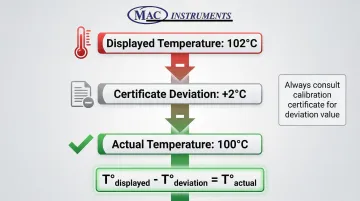
Use this formula: T°displayed - T°deviation = T°actual
The deviation value comes from the calibration kit's certificate. For example:
- Displayed temperature: 102°C
- Certificate deviation: +2°C
- Corrected temperature: 102°C - 2°C = 100°C (actual)
Test Additional Temperature Points:
- Set the second temperature point (typically 160°C)
- Heat for specified duration
- Read carefully and calculate corrected value
- Record results
Evaluation Criteria:
Compare corrected values against manufacturer specifications:
- Warning limit: Typically ±3°C
- Control limit: Typically ±5°C
Readings exceeding warning limits may require adjustment. Readings exceeding control limits require immediate adjustment.
MAC Instruments' MAC155 model includes a built-in calibration system that enables daily two-point calibration checks with ±1% full scale accuracy, streamlining this verification process.
Balance/Weight Calibration Procedure
After completing temperature calibration, proceed to balance calibration to ensure weight measurement accuracy.
Weight Calibration Setup:
- Access calibration mode per manufacturer instructions
- Remove sample pan holder to access weighing platform
- Clean platform with lint-free cloth
- Verify platform is undamaged
Calibration Process:
- Place certified calibration weight (typically 50g for initial calibration)
- Allow instrument to stabilize (typically 10-30 seconds)
- Confirm or adjust as needed per instrument prompts
- Remove weight when calibration completes
Accuracy Verification Testing:
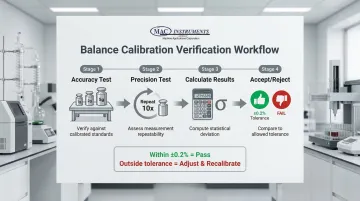
Test with multiple certified weights across the measurement range:
| Weight | Expected Reading | Actual Reading | Difference |
|---|---|---|---|
| 1g | 1.000g | Record value | Calculate |
| 2g | 2.000g | Record value | Calculate |
| 5g | 5.000g | Record value | Calculate |
Precision Testing:
- Place the same weight (e.g., 5g) ten times in a row
- Record each reading
- Calculate standard deviation
- Calculate measurement uncertainty: Uncertainty = (2 × Standard Deviation) / Actual Weight
Acceptance Criteria:
- Weight readings should be within ±0.2% of actual certified weight value
- Precision standard deviation should meet manufacturer specifications
- Values outside tolerance require adjustment and re-calibration after the instrument cools
Post-Calibration Verification and Testing
Verification testing confirms your calibration succeeded before you return the instrument to service. This final step catches any issues and provides documented proof of instrument readiness.
Functional Verification Steps
Start by testing the analyzer with a known moisture content sample to validate accuracy against a reference standard.
Check these core functions:
- Temperature reaches and holds at set points without drift
- Weight readings remain stable and repeatable across multiple tests
- All displays, controls, and interface elements respond normally
Successful Calibration Indicators
A properly calibrated analyzer shows consistent performance across all functions. Look for temperature readings within tolerance at every test point, weight measurements that repeat reliably, and no error messages or unexpected behavior during operation.
Documentation Requirements
Quality systems require complete calibration records for audit trails and compliance verification.
Document these details:
- All readings and calculations from calibration procedures
- Copies of calibration certificates for standards used
- Environmental conditions (temperature, humidity) during calibration
- Any changes or adjustments made to bring the instrument into specification
- Technician signature and date
Next Steps
Complete the calibration process with these final actions:
- Affix calibration sticker showing current date and next due date
- File calibration record per your quality system requirements
- Schedule next calibration (typically quarterly or per manufacturer recommendation)
- Return instrument to service
Common Calibration Problems and Solutions
Temperature Calibration Reading Outside Tolerance
Problem: Temperature reading deviates more than ±5°C from expected value
Likely Causes:
- Dirty or damaged reflector
- Contaminated temperature sensor
- Damaged protective glass
- Improper calibration kit placement
- Failing heating element
Solution: Clean heating compartment components per manufacturer instructions. Vapors from samples can deposit on the gold-plated reflector or protective glass, reducing heating efficiency.
Inspect components for damage and repeat calibration with proper kit placement. If the problem persists, contact your manufacturer's service organization for support.
Balance Calibration Shows Drift or Instability
Problem: Weight readings fluctuate or fail to stabilize during precision testing
Likely Causes:
- Environmental factors (vibration, air currents, temperature fluctuations)
- Contaminated weighing platform
- Insufficient warm-up time
- Internal balance component issues
Solution: Ensure a stable environment and proper warm-up time (minimum 1 hour). Clean the weighing platform thoroughly and check for drafts and vibration sources.
Repeat calibration after addressing environmental factors. Contact service if instability continues.
Instrument Fails Calibration After Adjustment
Problem: Calibration remains out of tolerance even after performing adjustment procedure
Likely Causes:
- Calibration standards out of certification
- Improper adjustment procedure
- Instrument requires professional service
- Environmental conditions unsuitable
Solution:
- Verify calibration standards have current valid certificates
- Review procedure steps carefully and repeat the adjustment
- Ensure environmental conditions meet specifications
- Label instrument "Out of Service" if calibration still fails
- Contact your manufacturer's service organization for professional calibration
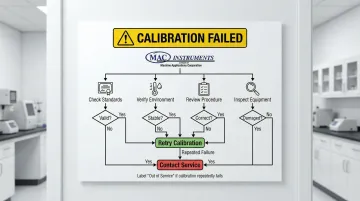
For instruments with built-in calibration systems like MAC Instruments' MAC155 model, consult the automated calibration diagnostics before scheduling service.
Pro Tips for Effective Calibration
Successful calibration requires more than just following procedures. These field-tested strategies help you maintain accuracy, extend equipment life, and avoid costly downtime.
Schedule Strategically:
- Perform during low-use periods to minimize disruption
- Allow adequate cooling time between uses and calibration
- Consider performing weight calibration before temperature calibration to reduce total cooling time
Maintain Calibration Standards:
- Store temperature calibration kit in original protective case
- Handle with provided handler to avoid contamination
- Keep calibration weights in protective case when not in use
- Maintain current calibration certificates for all standards
- Re-certify standards annually or per manufacturer specs
Document Thoroughly:
- Maintain detailed calibration logs with all raw readings
- Track trends over time to identify developing issues
- Photograph unusual findings or damage
- Keep copies of all calibration certificates with records
- Ensure documentation meets your industry's regulatory requirements
Know When to Call Professional Service:
- Calibration repeatedly fails after adjustment
- Visible damage to heating system or balance components
- Instrument behavior is erratic or unpredictable
- You lack certified calibration standards
Conclusion
Proper calibration—both temperature and weight—is essential for accurate moisture measurement, regulatory compliance, and reliable process control. ISO/IEC 17025:2017 and FDA regulations mandate documented calibration programs with traceable records.
Effective calibration programs require:
- Following manufacturer procedures with certified standards
- Maintaining thorough documentation and traceable records
- Implementing risk-based calibration intervals
- Controlling environmental conditions during calibration
These practices protect measurement integrity and ensure your moisture analyzer delivers accurate, defensible results. For industrial applications requiring NIST-traceable measurements, systems with built-in calibration capabilities streamline compliance while maintaining the precision demanded by both operational needs and regulatory requirements.
Frequently Asked Questions
Do you have to calibrate a moisture analyzer?
Yes, regular calibration is essential to maintain measurement accuracy, ensure regulatory compliance, and verify the instrument performs within specifications. Most applications require quarterly to monthly calibration depending on usage intensity.
Which chemical is used to calibrate a moisture analyzer?
Moisture analyzers use physical standards rather than chemicals: a certified temperature calibration kit (black disk) for temperature verification and NIST-traceable certified weights for balance calibration.
How often should I calibrate my moisture analyzer?
Quarterly calibration is standard for most applications. High-use environments or applications critical to product quality may require monthly calibration to maintain accuracy.
What is the difference between temperature calibration and weight calibration?
Temperature calibration verifies the heating system reaches set temperatures accurately, while weight calibration verifies the balance measures sample weight correctly. Both are necessary for accurate moisture content calculation.
Can I calibrate my moisture analyzer myself or do I need a professional?
Trained personnel can perform routine calibration using certified standards and manufacturer procedures. Professional service is recommended for failed calibrations, instrument damage, or annual comprehensive maintenance.
What are NIST-traceable calibration standards and why do they matter?
NIST-traceable standards are calibrated against national measurement standards, providing documented traceability through an unbroken chain of calibrations. This traceability supports regulatory compliance and ensures measurement accuracy.