Primary Keyword: ultrasonic vs electromagnetic flow meter
Meta Description: Explore ultrasonic vs electromagnetic flow meters and compare accuracy, installation flexibility, fluid types, and operational efficiency.
Reliable flow measurement is essential for industrial efficiency, precise process control, and operational safety. Despite its importance, many facilities struggle to select the right technology, leading to inaccurate readings, unexpected downtime, and higher maintenance costs.
In fact, studies indicate that inefficient flow measurement can reduce operational efficiency by up to 15% in water and wastewater systems, directly affecting productivity and profitability.
In this article, we compare ultrasonic vs electromagnetic flow meters, examining their measurement principles, technical advantages, and ideal applications.
Key Takeaways:
Ultrasonic Flow Meters are non-intrusive, ideal for clean fluids, retrofit projects, and applications requiring minimal process disruption. They offer low maintenance, quick installation, and flexible pipe compatibility.
Electromagnetic Flow Meters excel with conductive or challenging fluids, providing high accuracy, robust performance, and reliability in industrial environments.
Electromagnetic meters typically deliver ±0.5–1% accuracy, while ultrasonic meters offer ±1–2%, making the right choice dependent on fluid type, pipe conditions, and operational needs.
Combining the right flow meter with expert installation and process support ensures optimal performance, minimal downtime, and long-term reliability.
Expert guidance, precise instrumentation, and real-time monitoring support enable industries to select, install, and maintain flow meters effectively.
What is an Ultrasonic Flow Meter?
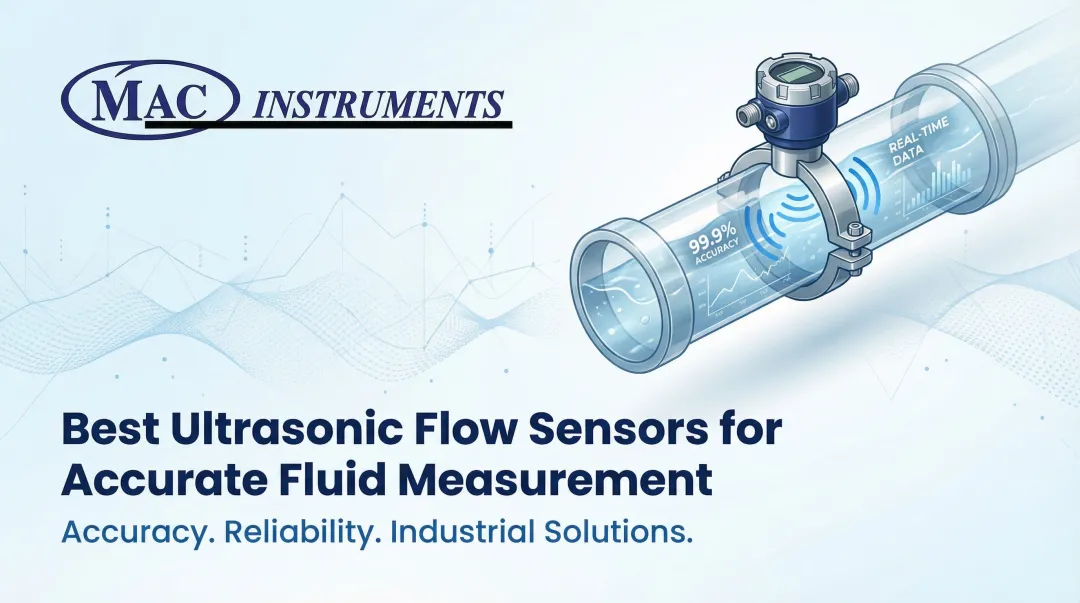
Ultrasonic flow meters measure fluid velocity inside pipes using high-frequency sound waves. By transmitting ultrasonic pulses through the fluid and analyzing either the transit time or the Doppler shift, these meters calculate volumetric flow rates without direct contact with the fluid.
This non-intrusive measurement method minimizes maintenance, avoids contamination, and makes ultrasonic meters ideal for applications where pipe cutting or process disruption is not feasible.
Key Technical Features & Advantages of Ultrasonic Flow Meter:
Non-Intrusive Measurement: Clamp-on or externally mounted versions attach to the pipe surface, eliminating direct contact with the fluid and preventing potential contamination.
Fluid Compatibility: Best suited for clean liquids, water, and specific chemical solutions. Works with some fluids containing small amounts of solids if using the Doppler principle. Non-conductive fluids are compatible as long as sound transmission is consistent.
Accuracy: Typically ±1–2% of reading, with performance potentially affected by air bubbles, suspended solids, or turbulent flow. Proper installation and pipe preparation help maximize precision.
Flow Range & Pipe Sizes: Supports large-diameter pipes and long pipelines, making it effective for municipal, industrial, and retrofitted systems.
Maintenance & Durability: Minimal maintenance is required due to no moving parts. Periodic calibration ensures consistent performance over time.
Signal Processing & Output: Advanced electronics provide analog and digital outputs, including 4–20 mA, pulse, and Modbus or HART protocols for integration with process control systems.
Ideal Applications: Retrofit projects, large-diameter pipelines, clean water monitoring, HVAC systems, and process water treatment. Suitable for applications where non-intrusive measurement is critical.
While ultrasonic meters excel in contactless measurement for clean fluids, electromagnetic meters provide unmatched accuracy for conductive and industrially challenging fluids.
What is an Electromagnetic Flow Meter?
Electromagnetic flow meters, also known as mag meters, operate on Faraday’s Law of Electromagnetic Induction. When a conductive fluid flows through a magnetic field, it induces a voltage proportional to the flow velocity.
Electrodes mounted on the pipe walls detect this voltage, which is then processed to calculate the precise volumetric flow rate.
This principle allows mag meters to provide accurate, repeatable measurements without any moving parts, making them highly reliable in demanding industrial environments.
Key Technical Features & Advantages of the Electromagnetic Flow Meter:
Fluid Compatibility: Works with electrically conductive liquids, including water, wastewater, slurries, acids, bases, and chemical solutions. Non-conductive fluids cannot be measured.
High Accuracy: Typically ±0.5–1% of reading, even under turbulent or abrasive conditions, ensuring consistent performance in industrial processes.
Flow Range & Pipe Sizes: Supports a wide flow range and large-diameter pipes, making it suitable for both small process lines and large-scale industrial pipelines.
Installation Requirements: Requires full pipe contact with proper grounding to ensure signal integrity. Can be installed in horizontal or vertical pipelines with proper straight-run lengths.
Maintenance & Durability: With no moving parts, mag meters are low-maintenance. Electrodes and lining materials may require occasional inspection or cleaning depending on the fluid type.
Signal Processing & Output: Equipped with advanced electronics to provide analog and digital outputs, including 4–20 mA, pulse, and Modbus or HART protocols for integration with control systems.
Ideal Applications: Wastewater treatment, chemical processing, pulp and paper, industrial fluids, and slurry handling. Performs reliably in harsh conditions with abrasive or corrosive media.
To make a smart decision between these two technologies, it’s essential to compare them across key technical parameters.
Ultrasonic vs Electromagnetic Flow Meters: Side-by-Side Comparison
Flow measurement technologies vary in how they sense and calculate fluid movement, and each method offers distinct advantages for specific conditions.
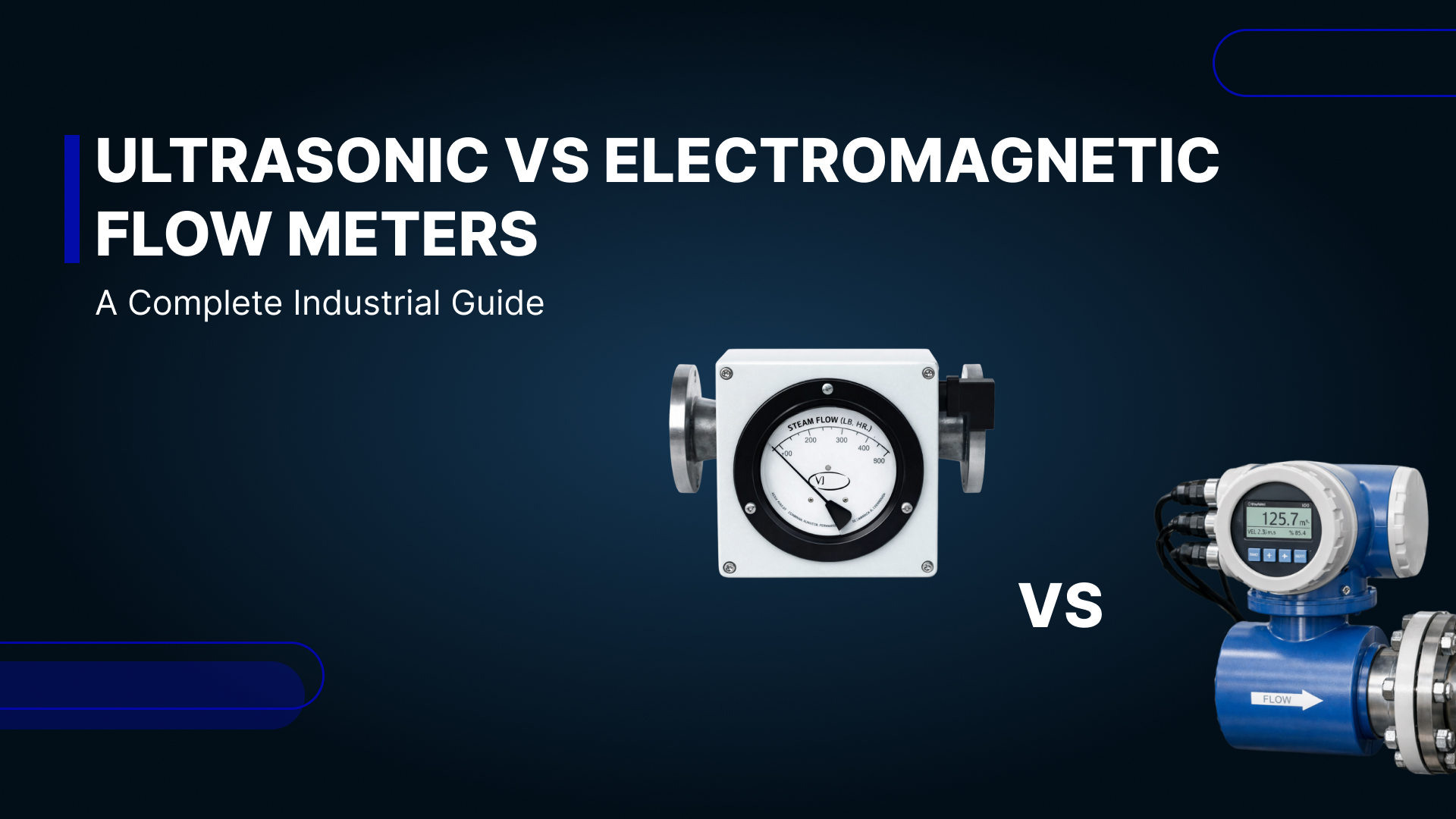
Ultrasonic meters use sound waves to capture flow rates without contacting the fluid, while electromagnetic meters measure the voltage generated by conductive fluids moving through a magnetic field.
To highlight the practical differences and help you quickly identify which technology fits your process, the table below presents a direct comparison of ultrasonic and electromagnetic flow meters:
Parameter | Ultrasonic Flow Meter | Electromagnetic Flow Meter |
Measurement Principle | Transit-time or Doppler ultrasonic waves | Faraday’s Law of Electromagnetic Induction |
Fluid Compatibility | Clean liquids, low solids | Conductive liquids, slurries, wastewater |
Accuracy | ±1–2%, sensitive to turbulence & bubbles | ±0.5–1%, stable across conditions |
Installation | Clamp-on or inline; minimal modification | Inline; full pipe contact & grounding needed |
Maintenance | Low; simple calibration | Low; electrodes cleaning & occasional calibration |
Pressure & Temperature Tolerance | Moderate | High with proper materials |
Pipe Size Range | Very flexible | Flexible; minimum diameter required |
Power Consumption | Low | Moderate |
Best Use Cases | HVAC, water treatment, clean chemical systems | Wastewater, chemical processing, pulp & paper |
Understanding these technical differences makes it easier to know when to choose ultrasonic or electromagnetic meters for your industrial process.
Which is Better: Ultrasonic vs Electromagnetic Flow Meter?
Choosing the right flow meter is critical for accurate process control, efficiency, and long-term reliability. Different technologies excel in different environments, and understanding their strengths can help you select the ideal solution for your application.
Below is a detailed breakdown to help you decide between ultrasonic and electromagnetic flow meters.
When to Choose Ultrasonic Flow Meters:
Ultrasonic flow meters are ideal for applications where non-intrusive measurement and fast installation are important.
These meters transmit ultrasonic waves through the fluid and calculate flow by measuring the transit time or frequency shift of the sound waves. This method eliminates moving parts and reduces maintenance. They are particularly suited for:
Non-intrusive applications, such as retrofitting existing pipelines.
Clean fluids with minimal solids or bubbles to ensure accurate acoustic signal transmission.
Fast installation with minimal downtime.
Industries and applications such as HVAC systems, clean water monitoring, food and beverage processing, and process water treatment.
On the other hand, electromagnetic flow meters shine in challenging environments where fluid conductivity and harsh conditions demand high accuracy.
When to Choose Electromagnetic Flow Meters:
Electromagnetic flow meters perform exceptionally well in environments where fluid conductivity and challenging conditions require high accuracy. They generate a magnetic field across the pipe, and the movement of conductive fluid produces a voltage proportional to flow velocity.
This principle ensures stable and repeatable measurements. Electromagnetic meters are ideal for:
Conductive or abrasive fluids, including slurries and wastewater.
Applications requiring high accuracy and repeatability under varying flow conditions.
Long-term industrial robustness and minimal maintenance.
Industries and applications such as chemical processing, pulp and paper, wastewater management, and mining.
While choosing the right flow meter is important, integrating it into a reliable process measurement system is equally critical; this is where MAC Instruments' expertise comes in.
How MAC Instruments Supports Industrial Flow Measurement?
Mac Instruments delivers precision flow measurement solutions designed to simplify operations, provide accurate results, and enhance performance across industries. By offering advanced instrumentation, MacInstrument ensures reliable monitoring and control of fluid systems, helping businesses make informed decisions with confidence.
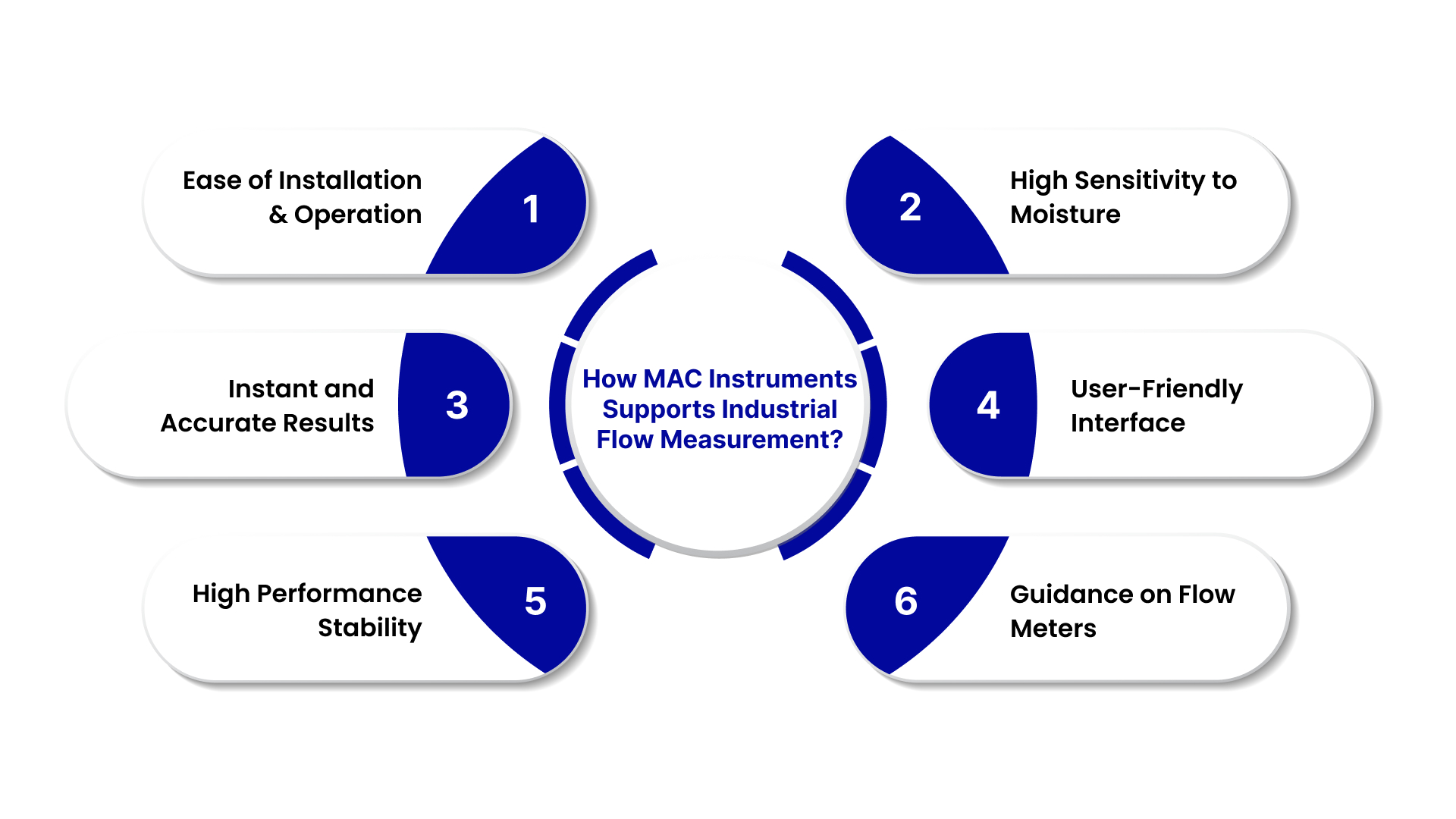
To translate these capabilities into tangible benefits, MacInstrument applies the following strategies across installation, operation, and application:
Ease of Installation & Operation: MacInstrument flow meters are designed for quick setup and straightforward operation, reducing downtime and enabling faster deployment.
High Sensitivity to Moisture: Detect even minimal water vapor or moisture content accurately, ensuring optimal process control.
Instant and Accurate Results: Obtain precise readings in real time, supporting timely and reliable decision-making.
User-Friendly Interface: Intuitive displays make it easy to read, interpret, and act on measurement data.
High Performance Stability: Consistent operation under varying conditions ensures long-term reliability and minimal maintenance.
Guidance on Ultrasonic vs Electromagnetic Flow Meters: MacInstrument helps you compare technologies and select the ideal solution based on accuracy, cost, and specific application requirements.
By combining MAC Instruments’ precision measurement solutions with the right flow meter technology, industries can improve efficiency, reduce waste, and maintain high product quality.
Conclusion
Selecting the right flow meter comes down to fluid type, installation requirements, accuracy needs, and operational environment. Ultrasonic meters are non-intrusive and efficient, making them ideal for clean fluids and retrofit projects where minimal disruption is desired.
In contrast, electromagnetic meters are highly accurate and robust, well-suited to conductive or challenging fluids, and provide reliable performance in demanding industrial applications.
With MAC Instruments, you gain expert guidance, reliable instrumentation, and process integration support that ensures your flow measurement systems are accurate, efficient, and low-maintenance. Connect with us today to find the perfect flow measurement solution for your needs.
FAQs
1. What is the main difference between ultrasonic and electromagnetic flow meters?
Ultrasonic flow meters use sound waves to measure fluid velocity, while electromagnetic flow meters measure flow based on the voltage generated when a conductive fluid passes through a magnetic field. The choice depends on fluid type, accuracy needs, and installation conditions.
2. Which type of flow meter is more accurate for water-based liquids?
Electromagnetic flow meters are generally more accurate for conductive, water-based liquids, whereas ultrasonic flow meters work well for clean or slightly dirty fluids and non-conductive liquids.
3. Are ultrasonic flow meters better for non-invasive installation?
Yes. Ultrasonic flow meters can be installed externally (clamp-on), avoiding pipeline disruption, while electromagnetic flow meters require insertion or full pipe contact for measurement.
4. How do maintenance requirements differ between these two types?
Ultrasonic flow meters have minimal maintenance because they have no moving parts and are often non-intrusive. Electromagnetic flow meters require occasional inspection of electrodes and lining, especially in abrasive or slurry applications.
5. Which flow meter is more cost-effective for industrial applications?
Electromagnetic flow meters are often more expensive upfront but offer high accuracy for conductive fluids. Ultrasonic meters can be more economical for applications requiring non-invasive measurement or for fluids that are non-conductive.